




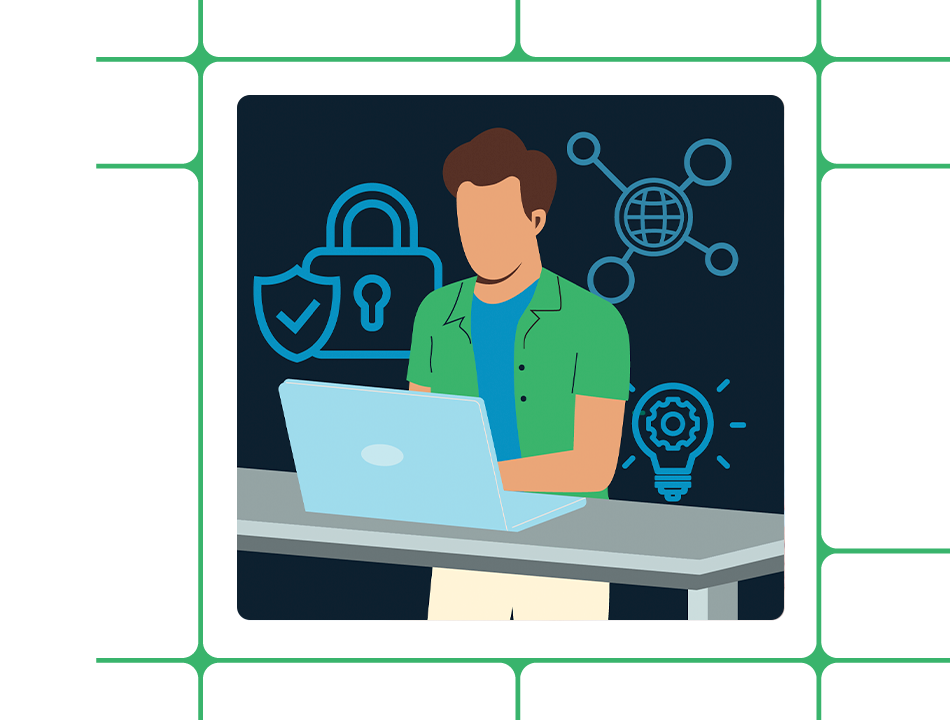
Meet Steven, Chief Information Officer
Steven is the Chief Information Officer at a large commercial insurance carrier. His world is defined by uptime, security, integration quality, and proving ROI on every technology investment. He partners closely with distribution, underwriting, and operations leaders, but he is also the gatekeeper. Every new insurance technology investment must integrate seamlessly with legacy core systems, meet security standards, scale across multiple lines of business, and deliver measurable value, all on top of a team already swamped with development work.
In a crowded insurtech market full of point solutions and promises, Steven is skeptical. He wants fewer vendors, less friction, and technology that moves the business forward without forcing a massive overhaul of core systems. And the pressure is growing; leadership wants to see artificial intelligence (AI) in action. Being seen as an AI-savvy organization signals innovation to the market, to partners, and to the board.
His goal: reduce integration complexity, improve automation and data quality, deploy AI in insurance in a way that actually works, and help the organization move faster without adding risk or technical debt.
The question that follows him everywhere: buy or build?
Steven Carries the Weight of Competing Demands
Steven's team gets technology requests from every corner of the organization. Improving the commercial lines process is a high priority, but it competes with everything else on his plate. His organization writes multiple commercial lines across different geographies, each with its own formats, languages, and regulations. Legacy systems need to talk to modern platforms. Every day, commercial risk data pours in from emails, PDFs, ACORD forms, spreadsheets, and agency submissions. However, each new tool he adds to the stack introduces a new cybersecurity risk.
The business wants better technology for commercial lines. He just needs a way to deliver it without stretching his team even thinner.
Steven's Reality: A Technology Strategy That Keeps Stalling
Modernizing the organization's technology stack is Steven's priority, but every new solution brings the same obstacles: integration complexity, security risk, adoption friction, and the cost of pulling engineers off work already in flight. Commercial risk data comes in all forms and never slows down. Getting it into a usable state takes real engineering effort, and the work never stops.
The Challenge: Building In-House Costs More Than It Saves
Building an internal platform has obvious appeal: full control, no vendor dependency, a custom fit. AI tools make in-house development more achievable, but some of their competitors have been building with AI for years. Starting now means playing catch-up while keeping the lights on. The technical demands are substantial, and the problems compound over time:
- Scalability hurdles. Rolling out across 40-plus commercial lines means a multi-year development program. Each new product or geography requires fresh engineering cycles that stretch timelines further.
- Edge-case management. Variability across lines of business, geographies, and regulatory environments generates a long tail of exceptions that demand constant engineering attention.
- Time and resource drain. Development cycles stretch into years. Engineers spend their time on foundational upkeep rather than building the proprietary capabilities that give the carrier a real competitive edge.
Why Point Solutions Make the Problem Worse
Steven has watched his organization try to bridge the gap with separate tools: one for document ingestion, another for data extraction, and another for workflow routing. Each tool solves one problem, but connecting each one to legacy core systems creates more integration work, not less. The result is a fragmented tech stack that nobody on his team fully understands, yet everyone depends on. His engineers spend their days maintaining infrastructure instead of advancing it.
The Solution: A Proven Platform That Connects, Not Disrupts
Now imagine a different story for Steven.
Every piece of incoming commercial risk data, including emails, PDFs, ACORD forms, spreadsheets, and agency submissions, is automatically digitized, converted to clean, structured data, and routed into the right systems without manual intervention. No integration project for each new data source. No workflow overhaul. Just reliable, configurable automation that fits around what Steven's organization already has.
This is the buy-to-build model: adopt proven foundational insurance technology, then direct engineering resources toward what actually differentiates the organization.
A commercial risk digitization platform built for insurance carriers handles the heavy lifting by:
- Ingesting data from any source. Documents, emails, PDFs, ACORD forms, and agency submissions convert automatically into organized, high-quality data. No manual keying. No custom connectors to build.
- Scaling across commercial lines without rebuilding. Configure new products, geographies, and regulatory environments through the platform and deploy in weeks, not years.
- Connecting to existing systems without disruption. Integrates with legacy core systems and modern tech stacks from day one, leaving existing architecture intact.
- Reducing security and compliance risk from the start. Enterprise-grade controls are built into the architecture. Steven's team inherits that posture immediately.
- Staying current with AI in insurance automatically. Continuous upgrades incorporate the latest advances in machine learning and insurance-specific automation, without additional engineering effort.
- Freeing engineers to build what matters. Focus technical staff on proprietary pricing models, risk segmentation tools, and underwriting logic that no outside vendor can replicate.
A Genuine Win for Steven and His Organization
Adopting a proven platform rather than building one gives Steven's organization speed and four clear advantages:
- Get to market faster. Deploy across commercial lines in weeks and start delivering results without pulling engineers off other priorities.
- Redirect engineers to what sets their organization apart. Direct technical staff toward the proprietary capabilities no vendor can replicate.
- Reduce integration risk and technical debt. Replace fragmented point solutions with a single platform that scales without adding complexity.
- Meet security and compliance requirements from day one. Satisfy IT and compliance stakeholders without generating a separate workstream.
Build vs. Buy: See the Difference
Buying foundational insurance technology infrastructure and building only what creates a competitive advantage is how modern insurance carriers move faster with less risk.
| Criteria | In-House Build | AI-Powered Risk Solution |
|---|---|---|
| Initial Development Time | 6–12 months + multi-year scaling | Weeks for scalable rollout |
| Handling Data Complexity | Challenging, manual adaptation | Built-in configuration and automation |
| Integration & Security | High risk and talent dependency | Enterprise-grade, seamless integration |
| Ongoing Maintenance | Heavy engineering overhead | Continuous software upgrades |
| Scalability Across Lines of Business | Multi-year program | Rapid, configurable scaling |
| Innovation & Model Updates | Resource-intensive | Embedded AI learning and rapid innovation |
| Focus of Internal Engineers | Foundational platform and upkeep | Differentiation and competitive advantage |
| Risk & Technical Debt | High | Significantly reduced |
Steven Made the Right Choice
Six months after adopting a risk digitization platform, Steven's organization looks different. The platform he chose was Cytora™, part of the Ivans® and Applied Systems® suite of insurance technology solutions.
Integration took weeks, not years. New commercial lines onboard through configuration, not code. Security and compliance were built into the platform. Plus, his engineers are building pricing tools and risk models instead of maintaining data pipelines.
When leadership asks how fast the organization can move, Steven has a new answer. Not "it depends on the roadmap." Not "we need to assess the integration complexity." Just: "Let's get started."
Start Your Journey Today
Your competitors are already modernizing. Don’t get left behind. Schedule a meeting with our team and see exactly where your insurance technology stands today, where it needs to go, and how we can get you there faster than building it yourself.